
On this page
Syphilis (lues) is a classic sexually transmitted disease (STD/STI) caused by Treponema pallidum, a spirochaete (spiral-shaped) bacterium. Although medicine has been working for decades to eliminate the disease, the latest international and Hungarian epidemiological data show a dramatic rise in cases worldwide among sexually active people.
Treponema pallidum is a very fragile organism: humans are its only natural host, and because it is sensitive to cold, heat and oxygen, it can survive outside the body for only a very short time. It needs close, direct contact to spread. The ultra-specific DNA PCR test available at Sabjanics Medical Center is one of the most important tools in modern diagnostics: it can detect the bacterium's genetic material directly in the early, most infectious stage of infection.
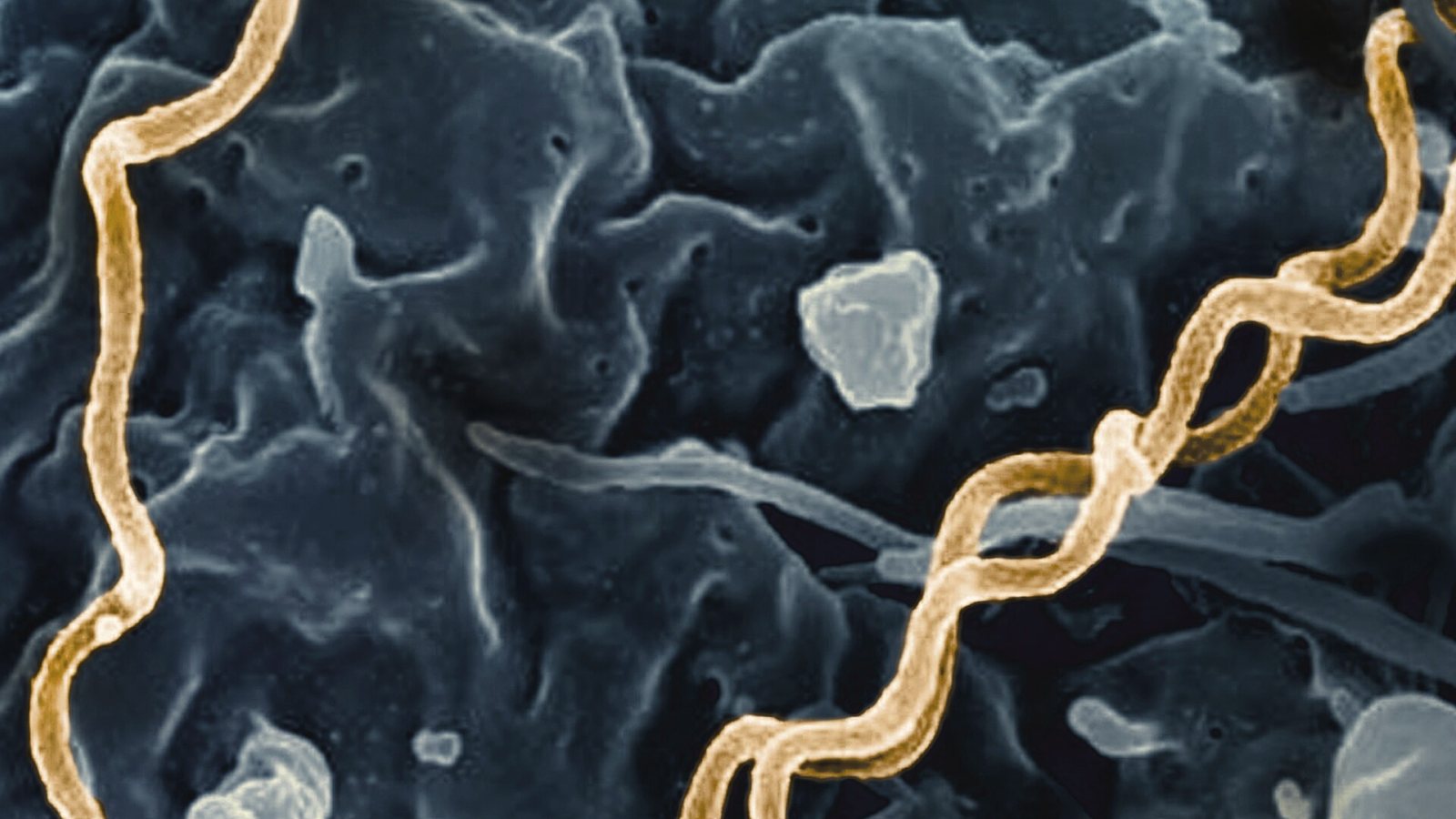
How does the infection spread? Entry at cell level
Syphilis is extremely infectious: clinical data show that body fluid containing as few as 10 bacteria can be enough to pass on the disease.
- Ways in: During sexual contact with an actively infected partner, the bacteria enter directly through the mucous membranes, or through tiny, microscopic abrasions in the skin, which are naturally present in the genital and perianal (around the anus) areas because the skin there is thinner.
- Attachment: For infection to take hold, the bacterium has to attach firmly to the host's surface cells and the tissue between them.
- Vertical transmission (mother to child): The infection can also pass to the unborn baby through the placenta (vertically). The risk is highest in the first 1–2 years after the mother is infected (primary, secondary and early latent stages), but the risk remains throughout the first 4 years after exposure.
Why 'the Great Imitator'? The clinical stages of syphilis
The disease produces extremely varied symptoms that often mimic completely different infections or skin conditions, which is why it has rightly earned the name 'the Great Imitator' in medicine. Without treatment, syphilis progresses through four clearly distinct stages:
1. Primary stage
About 3 weeks after infection, one or more lesions called a hard chancre appear at the point of entry (genitals, anus, mouth), along with marked swelling of the lymph nodes in the groin. These ulcers are completely painless, yet the fluid from them contains huge numbers of bacteria. Even without treatment they heal on their own within 3–6 weeks, which gives a false impression of recovery – while the bacterium is in fact spreading into the bloodstream.
2. Secondary stage
It develops weeks after the ulcer has gone. This is the stage at which patients most often see a doctor. It is marked by a blotchy, bumpy (maculopapular) rash across the body – especially on the upper body, the back, the palms and the soles of the feet. At the same time, broad-based, highly infectious wart-like growths (condylomata lata) may appear around the perineum and anus.
3. Latent stage
As the rash and active symptoms fade, the disease enters a hidden phase, in which it can persist in the body with no symptoms at all for years or even decades.
4. Tertiary stage
It develops 10–20 years after the initial infection in people who have not been treated. It causes serious neurological symptoms (neurosyphilis), irreversible damage to internal organs and blood vessels, and deep, ulcerating skin lesions (gummas). Since modern antibiotics became widely available, this stage has become much rarer.

When is the test particularly recommended?
Specialists at Sabjanics Medical Center recommend a targeted Treponema pallidum PCR or the comprehensive multiplex STD PCR panel in the following cases:
- If you have any symptoms that suggest a sexually transmitted disease (a painless ulcer, an unusual rash, discharge, swollen lymph nodes).
- If a current or previous sexual partner has been diagnosed with a sexually transmitted infection.
- If you have a new sexual partner, or more than one sexual partner.
- As part of regular screening for higher-risk groups, such as MSM (men who have sex with men).
Why is DNA PCR testing a breakthrough in diagnosing syphilis?
There are many ways to detect syphilis (e.g. serological blood tests such as VDRL, RPR or the specific TPHA test). Real-Time PCR technology, however, fills a unique and critical gap in diagnosis:
- Immediate detection in the early stage: Standard blood tests measure the body's immune response (antibodies), which can take 4–6 weeks to appear after infection. PCR, by contrast, identifies the bacterium's DNA directly from genital ulcers, so it can confirm syphilis in the very first days, before antibodies appear.
- Pinpoint accuracy: PCR is highly sensitive and specific for samples taken from skin, mucous membrane or tissue lesions (ulcers, rashes). An important clinical fact is that PCR on blood or spinal fluid is not recommended for routine screening, because these fluids contain few free bacteria – whereas the surface of a sore is teeming with them.
- Please note: because the number of bacteria on the surface of a sore can vary, a negative PCR test does not rule out syphilis 100%. If syphilis is suspected, the result must be assessed together with the clinical picture and serological tests.
A short guide to the test
IMPORTANT INFORMATION FOR PATIENTS
- How is the sample taken?
- The test needs a special swab taken from the surface of the active lesion (ulcer, sore, rash) with a sterile swab. We place the sample in a special transport medium which, kept cold, preserves the DNA for days until it is analysed in the laboratory.
- How should I prepare for the test?
- No special preparation is needed, and the sample can be taken at any time of day. For accuracy, please strictly avoid perfumed shower gels, soaps and intimate washes (douching) on the affected areas in the 4 hours before the sample, as these can destroy the DNA on the surface.
- How will I receive my result?
- With your consent, we email your result as an encrypted, password-protected PDF. At the follow-up consultation, our specialist will explain it to you in detail. How results are sent
What should you do if your result is positive?
Syphilis can still be treated effectively and cured completely at every stage with proper antibiotic treatment (especially penicillin-based medicines).
- Prompt specialist consultation: If your PCR result is positive, contact the dermatology and venereology specialist at Sabjanics Medical Center without delay, to confirm the diagnosis and start a targeted treatment plan.
- Testing and treating your partner: Because syphilis is highly infectious, it is essential to test and treat your sexual partner(s) at the same time to prevent the 'ping-pong effect' (passing the infection back and forth). You must stop all sexual activity until you are confirmed cured.
Don't let 'the Great Imitator' fool you. If you notice a painless sore of unclear origin, or you have had a new partner, choose safety. Book a professional, fully discreet, state-of-the-art Treponema pallidum PCR screening test at Sabjanics Medical Center.
This guide does not replace a consultation with a doctor.