
On this page
Haemostasis – testing blood clotting
The haemostasis system is one of the body’s most complex and important defences: its job is to stop bleeding when you are injured, while keeping blood flowing freely through the vessels.
Blood clotting (coagulation) is a finely regulated process in which clotting factors, platelets and the vessel wall work together.
If this balance is upset, excessive bleeding or, on the contrary, thrombosis can develop – both can have serious consequences.
Laboratory testing of haemostasis is therefore key for both diagnosis and prevention.
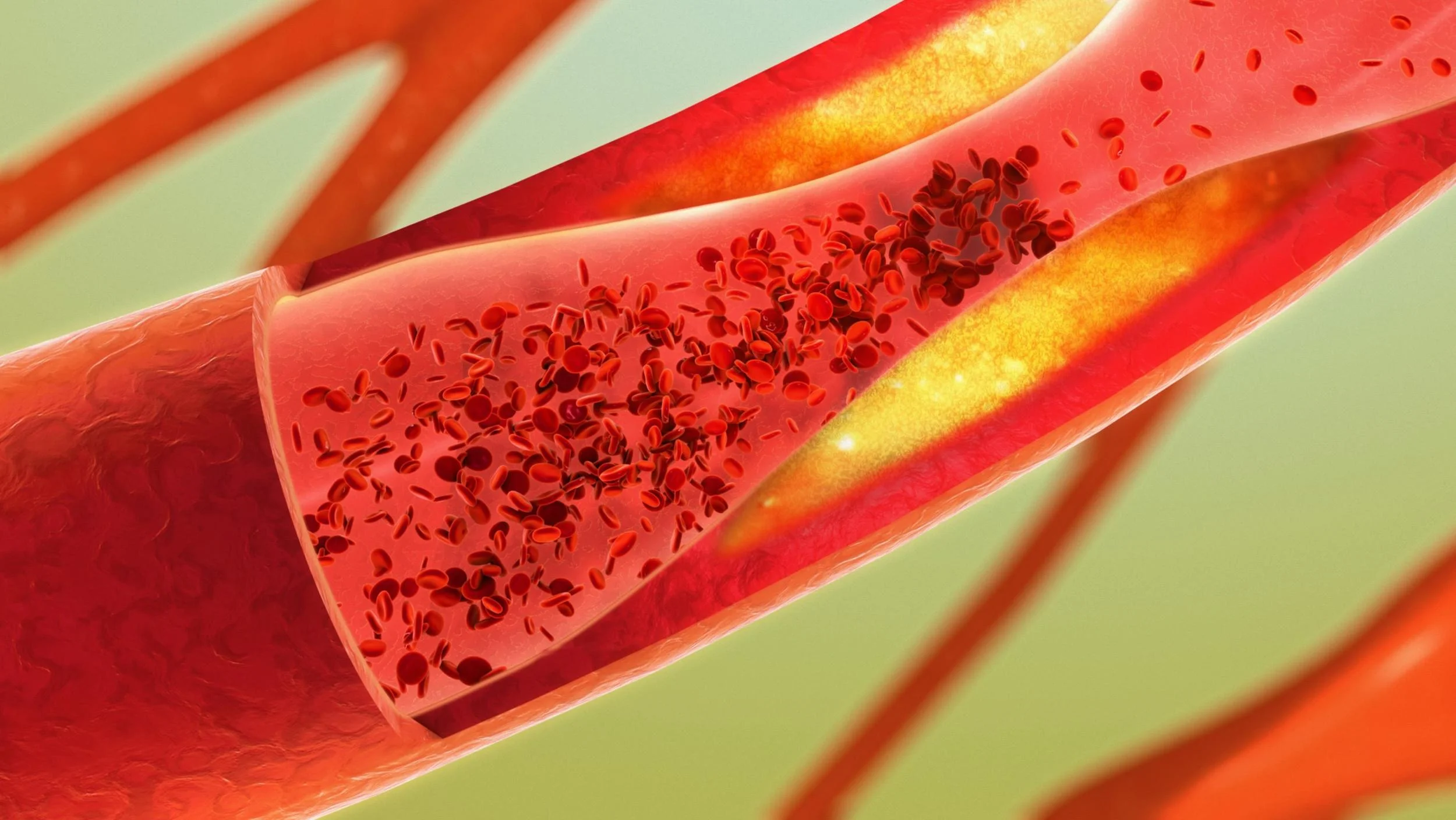
What does the haemostasis lab test?
When testing the clotting system, the laboratory uses various functional and factor activity tests to measure each step of the clotting process and its regulating factors separately, showing how blood turns from a liquid into a stable clot.
The tests help detect:
- an inability of the blood to clot properly (bleeding tendency, clotting factor deficiency),
- an increased tendency to clot (thrombophilia),
- as well as the effectiveness and safety of blood-thinning treatments.
The most common haemostasis tests are:
- Prothrombin time (PT) and INR
The prothrombin time (PT) shows how quickly the extrinsic clotting pathway of the blood can form a fibrin mesh, that is, a clot.
The result is also given as the INR (International Normalized Ratio), the internationally standardised measure of blood clotting.
- Raised INR → the blood clots less easily, which points to a bleeding tendency or the effect of blood-thinning treatment (e.g. warfarin).
- Low INR → may indicate an increased tendency to thrombosis.
Regular INR checks are essential for people taking anticoagulant medicines (coumarin derivatives).
- Activated partial thromboplastin time (aPTT)
The aPTT tests how the intrinsic clotting pathway of the blood works.
It can detect certain clotting factor deficiencies (e.g. factor VIII, factor IX – haemophilia), and the effect of (unfractionated) heparin treatment can also be monitored.
A prolonged aPTT may point to clotting disorders or an anticoagulant overdose, while a shortened aPTT may signal increased clotting.
- Measuring fibrinogen
The plasma protein fibrinogen is one of the most important proteins in the blood, the “building material” needed to form a clot.
Measuring its level helps assess whether the body can form clots properly.
- A low fibrinogen level can be linked to a bleeding tendency, liver disease or DIC syndrome (increased clotting using up fibrinogen).
- A high fibrinogen level occurs with inflammation or blood vessel disease and may mean an increased risk of thrombosis.
- D-dimer test
The D-dimer marker is a protein fragment produced when the fibrin mesh breaks down, and it signals clot formation and fibrinolysis (clot breakdown).
A raised level indicates an active clotting process, so it is especially useful when deep vein thrombosis, pulmonary embolism or disseminated intravascular coagulation (DIC) is suspected.
The D-dimer test is a quick, highly sensitive method that helps rule out or confirm suspected thrombosis.
It is important to note that D-dimer has a high negative predictive value! This means that when the result is “normal/negative”, a thrombotic event (deep vein thrombosis, thromboembolism) can practically be ruled out. If it is raised, however, there can be many reasons: besides thrombosis, inflammation, a tumour, pregnancy, older age, a recent infection, vaccination and so on. Clarifying this is the job of your treating doctor.
When is a haemostasis test needed?
Your doctor may recommend a clotting test in several situations, for example:
- before surgery, to assess the risk of bleeding,
- when starting or checking anticoagulant treatment,
- unusually prolonged bleeding or frequent bruising,
- thrombosis or suspected pulmonary embolism,
- liver disease investigations,
- and when investigating inherited clotting disorders.
Regular haemostasis checks may also be important for people who take the contraceptive pill, smoke or lead a sedentary lifestyle, as their risk of thrombosis is higher.
Sample collection and preparation
For haemostasis tests, a venous blood sample is usually taken into a special tube containing an anticoagulant.
The test is done in the morning, on an empty stomach, and we recommend following these rules:
- do not eat for 8–12 hours before the blood test; drink only water,
- avoid alcohol, caffeine and smoking,
- on the day of the blood test, avoid strenuous physical activity.
The sample is sensitive to temperature and processing time, so immediate laboratory processing is key to an accurate result.
Evaluating the results
Haemostasis test results are always interpreted by the doctor, together with your clinical symptoms, medication and medical history.
Abnormal results may point not only to faulty clotting factors but also to liver disease, inflammation, infection or immunological processes.
The aim is not just to correct the laboratory values but to restore the clotting balance and prevent complications.
Why haemostasis tests matter for staying healthy
Proper blood clotting is essential to life.
Haemostasis laboratory tests make it possible to detect a tendency to bleeding or thrombosis in time, before it leads to serious consequences.
These tests are especially important for prevention and safe medical care, as a precisely adjusted clotting balance can save lives.
As part of looking after your health, a periodic check of the clotting system is recommended for all ages – because health starts with prevention.