
On this page
Sexually transmitted infections (STI/STD) of the urogenital tract are most often caused by five main organisms: Treponema pallidum, Neisseria gonorrhoeae, Chlamydia trachomatis, Mycoplasma genitalium and Trichomonas vaginalis. The last of these is a highly mobile, single-celled parasite (protozoan) with whip-like flagella that causes trichomoniasis, one of the most common sexually transmitted diseases in the world.
Because Trichomonas vaginalis is found worldwide and often occurs together with other sexually transmitted infections (co-infection), it is a major public health problem. Medical research has clearly shown that, because a Trichomonas infection weakens and inflames the mucous membranes, people become much more susceptible to other serious infections, including gonorrhoea, human papillomavirus (HPV), herpes simplex virus (HSV) and HIV. The ultra-precise DNA PCR test available at Sabjanics Medical Center detects the parasite's genetic material directly, making it the most reliable diagnostic method there is.
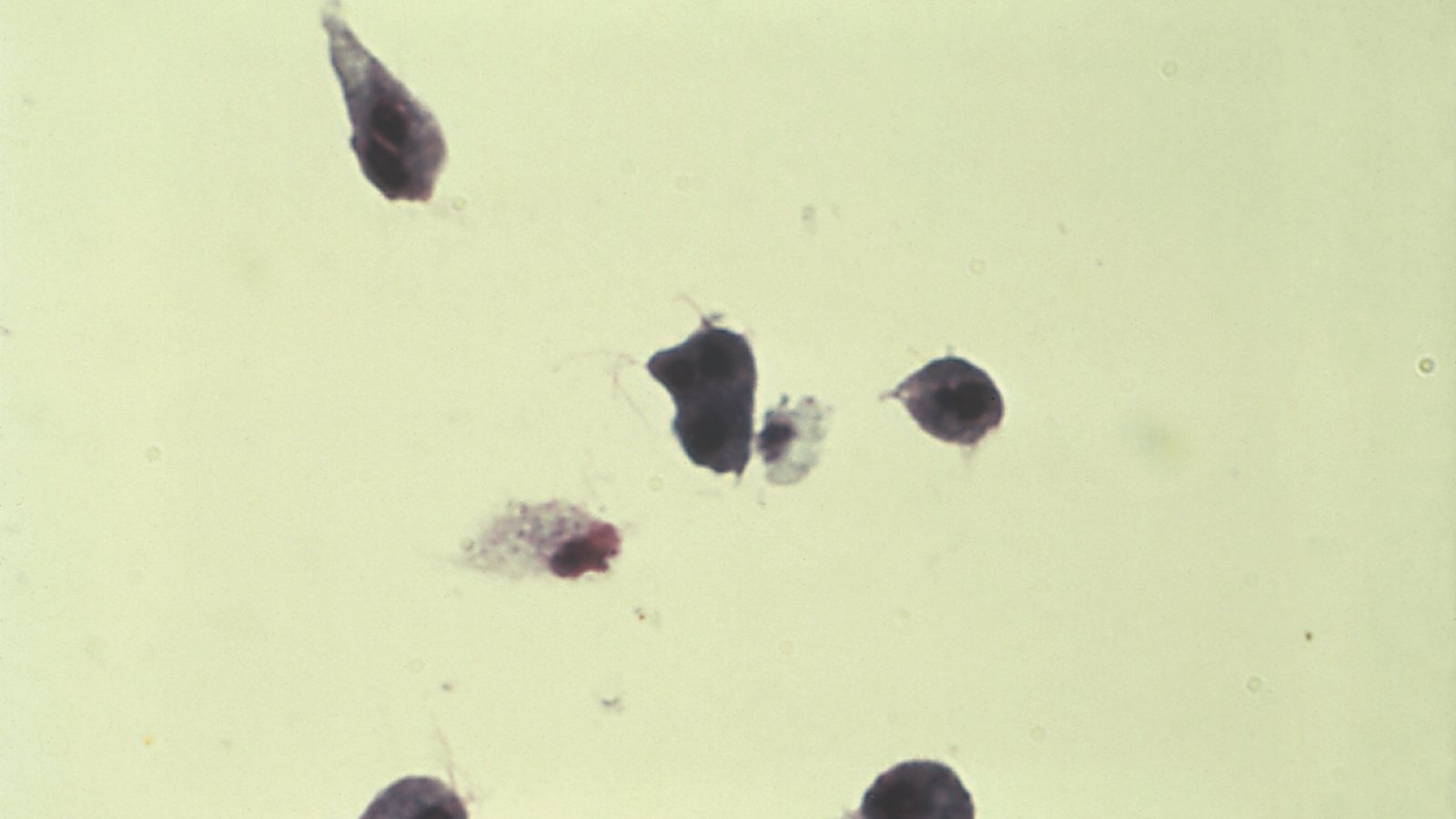
How does the infection spread, and where does it settle?
Humans are the only known host of the infection, and it is passed on mainly through sexual contact.
- The parasite settles mainly on the mucous membranes of the urinary and genital organs. It is most likely to be found in vaginal discharge in women and in urethral discharge in men.
- Although its presence around the rectum among men who have sex with men (MSM) is statistically low, and it is very rarely found in the mouth, clinical evidence shows it can, in rare cases, cause a sexually transmitted infection of the mouth.
Symptoms and serious complications of trichomoniasis
The infection can be very deceptive, because in many cases it stays completely hidden:
1. Symptoms in women:
Some infected women may have no symptoms at all, but if the parasite multiplies, clear symptoms appear:
- Heavy, often unpleasant-smelling, greenish-yellow and sometimes frothy vaginal discharge.
- Intense irritation, itching and burning of the vulva and vaginal opening.
- Pain when passing urine and discomfort during sex.
2. Symptoms in men:
In the vast majority of cases, men are carriers with no symptoms at all, which increases the risk of passing the infection on unknowingly. When there are symptoms, a non-gonococcal inflammation of the urethra (urethritis) develops, with a mild, watery discharge from the urethra and a stinging, burning feeling when passing urine or ejaculating.
Serious long-term complications:
Untreated, chronic trichomoniasis can lead to serious damage to your health:
- Infertility: It can directly contribute to infertility in both sexes.
- Pregnancy complications: During pregnancy it can lead to poor pregnancy outcomes, premature rupture of the membranes, miscarriage or premature birth.
- Infections after surgery: It significantly increases the risk of pelvic infections after gynaecological procedures.
- Cancer risk: Long-term infection is closely linked to the development of precancerous cell changes in the cervix (cervical neoplasia).
When is the test particularly recommended?
Specialists at Sabjanics Medical Center recommend targeted screening in the following cases:
- Whenever a patient has already been diagnosed with another sexually transmitted infection (e.g. HIV, HBV or HCV positivity, chlamydia, gonorrhoea), to rule out common co-infections.
- For people who regularly change sexual partners or have several partners, and when screening sex workers.
- For MSM, as part of routine annual STI screening.
- As an additional test in the differential diagnosis of patients with unclear neurological symptoms suggestive of neurosyphilis (syphilis affecting the nervous system).

Why is Real-Time PCR the most reliable diagnostic tool?
Traditional microbiological diagnosis (direct microscopy or culturing the parasite) is often inaccurate: outside the body the parasites lose their mobility and die very quickly, so culture or identification under the microscope often fails.
The molecular Real-Time PCR technology we use, by contrast:
- It identifies the DNA (genetic material) of Trichomonas vaginalis directly, so it does not need a live or moving organism.
- Ultra-sensitive and specific: It gives a clear-cut, reliable result even when very few organisms are present, or when someone is a hidden carrier with no symptoms at all.
A short guide to the test
IMPORTANT INFORMATION FOR PATIENTS
- What sample is used for screening?
- Depending on the clinical indication and the patient's sex, the sample may be taken with a sterile swab from the urethra, the cervix, as a cell scraping from the posterolateral (back and side) vaginal wall, or as a swab from the perianal region (around the anus).
- How should I prepare for the test?
- No special preparation is needed, the sample can be taken at any time of day, and there are no dietary restrictions.
For accuracy, please strictly avoid perfumed shower gels, soaps and intimate washes (douching) on the affected areas in the 4 hours before the sample, as these can wash away the DNA on the surface. Men should avoid passing urine for 2–3 hours before a urethral sample. - How will I receive my result?
- With your consent, we email your result as an encrypted, password-protected PDF. At the follow-up consultation, our specialist will explain it to you in detail. How results are sent
What should you do after a positive result?
Trichomoniasis can still be cured completely and effectively with specific antiparasitic (antiprotozoal) medicines.
- Medical diagnosis: If your PCR result is positive, a Sabjanics Medical Center specialist reviews your detailed medical history and all your laboratory results together to make the final diagnosis, and prescribes targeted medication.
- Testing and treating your partner(s) is essential: To avoid the 'ping-pong effect' (passing the infection back and forth), your sexual partner or partners must be tested and treated at the same time, even if they have no symptoms at all. You must stop all sexual activity until a laboratory test confirms you are cured.
Protect your urogenital health and your future. If you have unpleasant vaginal discharge or stubborn intimate irritation, or you have had a new partner without a condom, choose to be safe. Book a professional, fast and fully discreet Trichomonas vaginalis PCR screening test at Sabjanics Medical Center.
This guide does not replace a consultation with a doctor.